
For years, website owners had no real window into how AI systems were using their content. There was no way to tell if your pages were feeding AI answers or being skipped entirely. That shifted in February 2026 when Microsoft launched the AI Performance tool inside Bing Webmaster Tools as a public preview.
Now, for the first time, there is actual data on how AI uses your content. Before diving into what the tool tracks, it is worth understanding how AI search visibility works and why it behaves differently from traditional search metrics.
AI Performance in Bing Webmaster Tool gives you a direct view into how Microsoft Copilot and Bing’s AI summaries pull from your pages when building responses.
That is more significant than it first appears. AI systems have been referencing content across the web for a while now, but site owners had no visibility into it. Within Microsoft’s ecosystem, that gap now has an answer.
The tool comes with real limitations, though. Misreading the data can send your content strategy in the wrong direction, so it helps to go in with the right expectations.
Here is what this guide covers:
- What AI Performance in Bing Webmaster actually tracks and what it misses
- How accurate the data is and where it falls short
- How to access and set up Bing AI performance
- How to optimize your content for higher AI citations in Bing Copilot
What Is AI Performance in Bing Webmaster Tool?
AI Performance in Bing Webmaster Tool is the first official reporting feature from a major search engine that shows how your content gets used inside AI-generated responses. It is completely free to access. The tool tracks how Microsoft Copilot and Bing AI built answers that reference your pages while responding to user search queries.
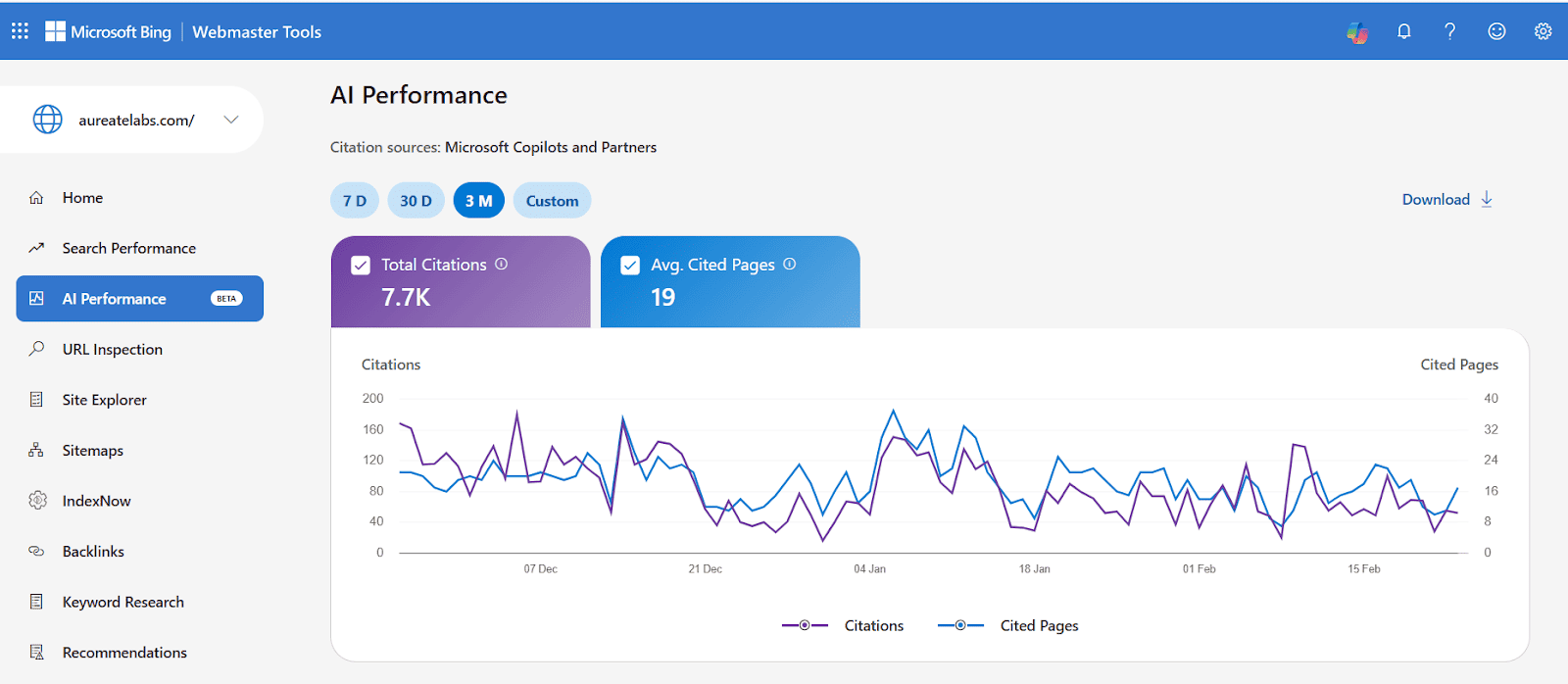
The simplest way to understand it is as a citation log. Every time Copilot pulls from your content to construct a response, the tool records that event. Over a rolling 90-day window, you get a picture of which unique pages are being referenced, how often, and around what general topics.
This points to a real shift in how search performance works. Rankings used to be the whole game. Today, a user can put a question to Copilot and walk away with a complete answer without clicking a single blue link. If your content shaped that answer, you influenced the outcome without earning a visit. That is the exact gap AI Performance in Bing Webmaster is built to close.
To show this in practice, I asked Microsoft Copilot, “What are LLMs?” and watched how it responded.
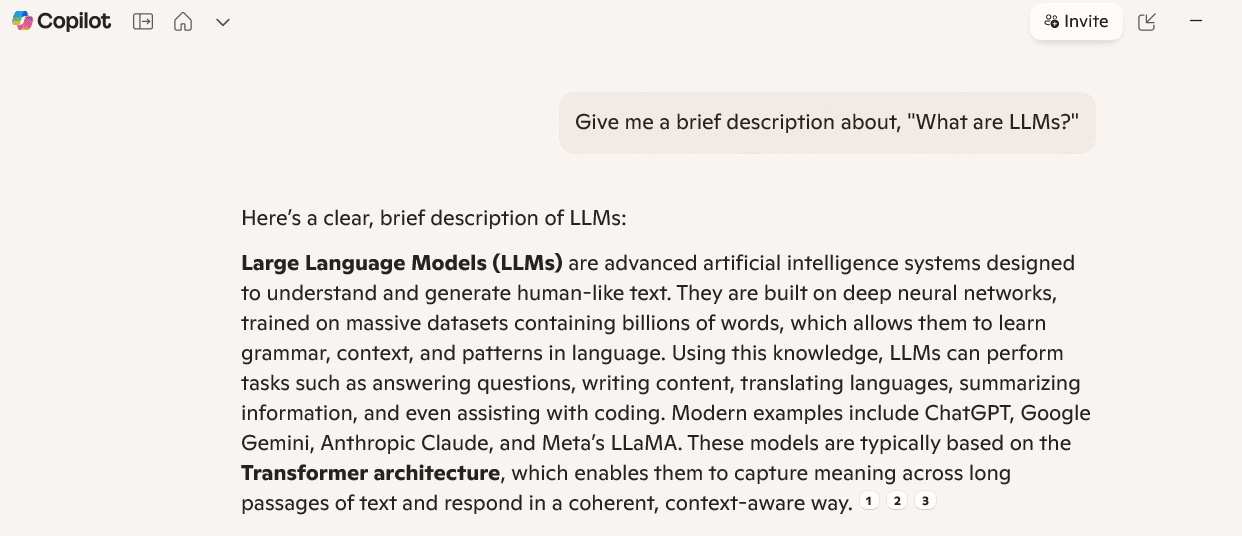
So who actually needs this tool? Any website owner who thinks about visibility as something broader than page rankings. That includes marketers, SEO professionals, content teams, and publishers. If you are blocking AI crawlers in your robots.txt right now, you will not see any data in the AI performance dashboard. But even that absence tells you something worth knowing.
What Platforms and Surfaces Does Microsoft Bing Webmaster Tool Cover?
The AI Performance in Bing Webmaster tool covers supported AI surfaces within Microsoft’s ecosystem specifically. That starts with Microsoft Copilot, extends to Bing AI-generated summaries, and includes a limited set of select partner integrations.
| Platform / Surface | AI Visibility Data Available | What You Can See | Key Limitations |
| Microsoft Copilot | Yes | Citations, cited URLs, trends over time | Limited to Microsoft ecosystem |
| Bing AI summaries | Yes | AI citation counts and page-level visibility | No insight outside Bing results |
| Microsoft partner AI surfaces | Partial | Select citation and performance data | Coverage varies, not comprehensive |
| ChatGPT | No | None | No public citation or visibility reporting |
| Perplexity | No | None | Citations visible only inside responses |
| Google AI Overviews | No | None | No reporting or attribution metrics |
| Claude | No | None | No source-level visibility data |
| Gemini | No | None | No external analytics access |
What this webmaster tool does not account for: ChatGPT, Perplexity, Google AI Overviews, Claude, and Gemini. None of those platforms makes this kind of data available yet.
That is a notable gap to be aware of. If you are basing content decisions solely on what Bing Webmaster Tools shows you, you are only working with one slice of the full picture. We will get into how to address that gap further in this guide.
5 Core Metrics of Bing Webmaster’s AI Performance Dashboard
The AI Performance dashboard gives you five core metrics inside Bing Webmaster Tools. Each metric answers a different question about how your content is being used. None of them, on their own, tells you the full story.
1. Total Citations
Total citations tell you how many times your site appeared as a source within the selected date range. Think of it as a frequency count, not a measure of prominence. It confirms your site was cited, but says nothing about where in the response it showed up, whether you were the lead source driving the answer, or a minor reference buried somewhere in the middle.
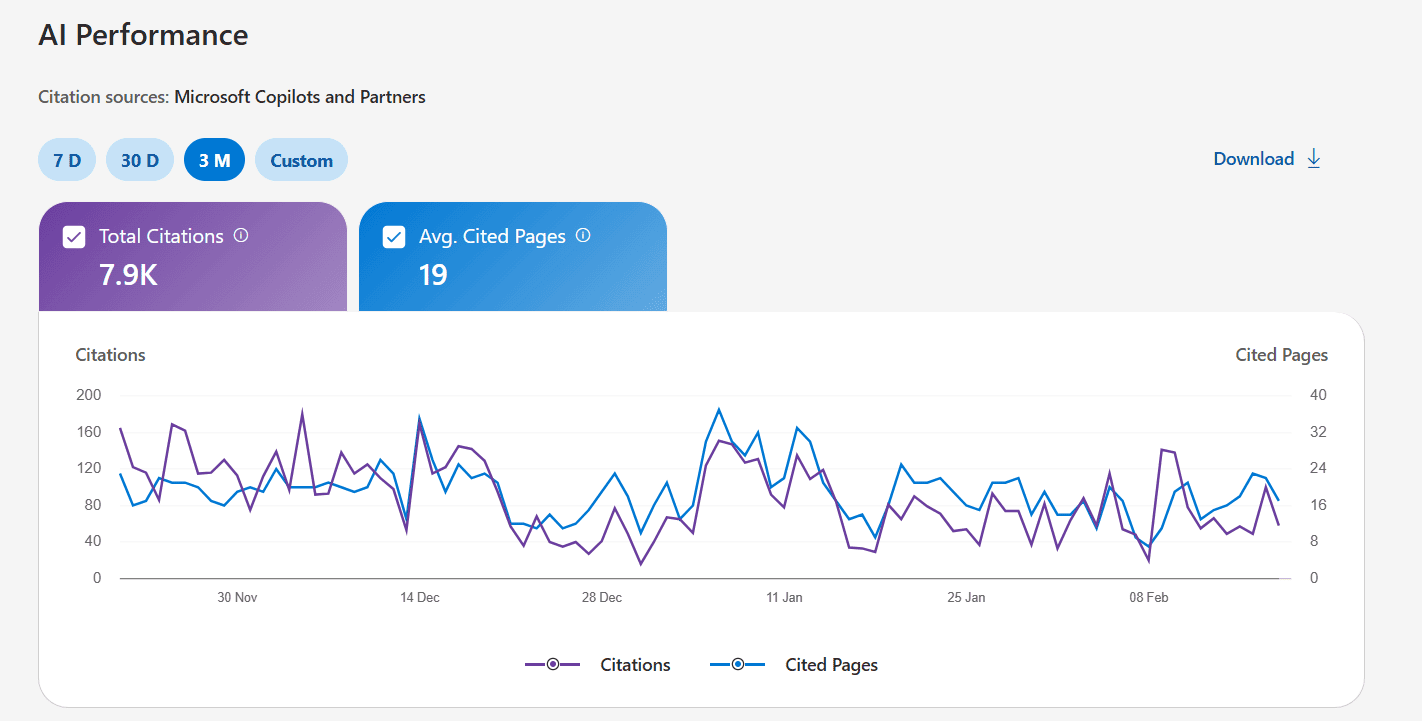
If that number is increasing, that is a positive sign worth noting. Just be careful about how you frame it. Total citations and traffic are not the same metric, and presenting them as equivalent to stakeholders will create problems down the line.
2. Average Cited Pages
Average cited pages shows the daily average of unique pages your site contributed as sources within the selected date range. The formula is simple enough: total cited pages divided by the number of days in the period.
What this metric really tells you is how widely the AI is pulling from your site. Even on decent-sized sites, it is common to find just 3-5 pages accounting for the majority of citation activity. That concentration is normal, but it is also a signal worth paying attention to.
If you have a hundred indexed articles and only three are doing the bulk of the work, you are most likely dealing with a content quality gap, a structural problem across the remaining pages, or both.
3. Grounding Queries
Most people misread this metric, and it’s easy to see why. Grounding queries are the key phrases the AI used internally when retrieving your content. They have nothing to do with what the user actually typed. Think of them as the AI’s own reinterpretation of user intent at the exact moment it went searching for source material.
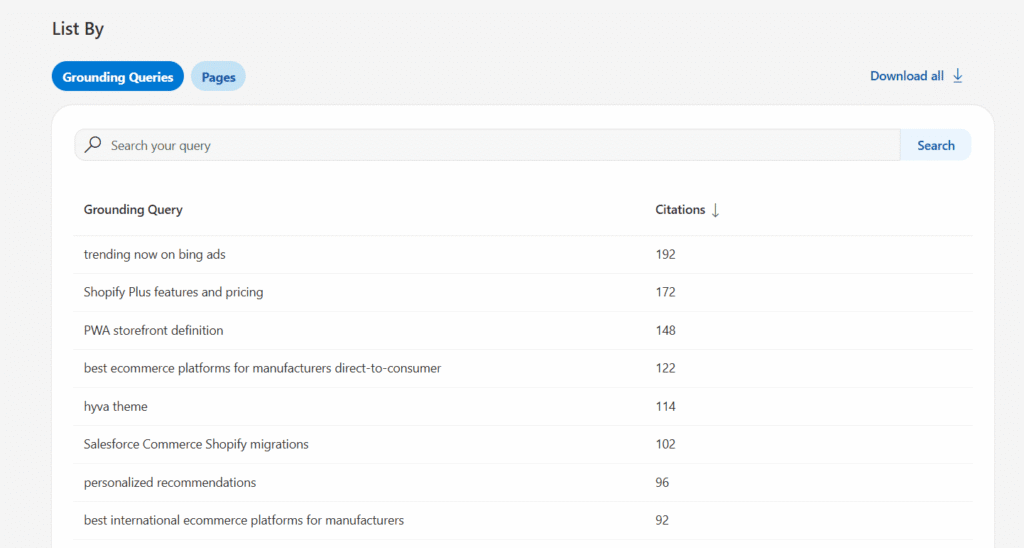
Say a user searches “Best dishwashers 2026.” When the AI goes to pull relevant content, it might translate that into something closer to “dishwasher energy efficiency comparison.” That translated phrase is what surfaces in your grounding queries data.
Before you build a strategy around this data, two caveats: it is sampled, so it does not capture every retrieval event that happened. And these phrases show how AI systems generate answers, not how real users ask questions. Use them to guide your content thinking, but keep them in the directional signals category, not hard audience research.
4. Page-Level Citation Activity
Page-level citation activity gives you citation counts broken down by specific URL. This is where you move from a site-wide view to understanding which individual pages are actually earning citations. The pages that show up consistently tend to share a recognizable pattern: clean structure, concrete data points, and answers that cut straight to what the reader needs.
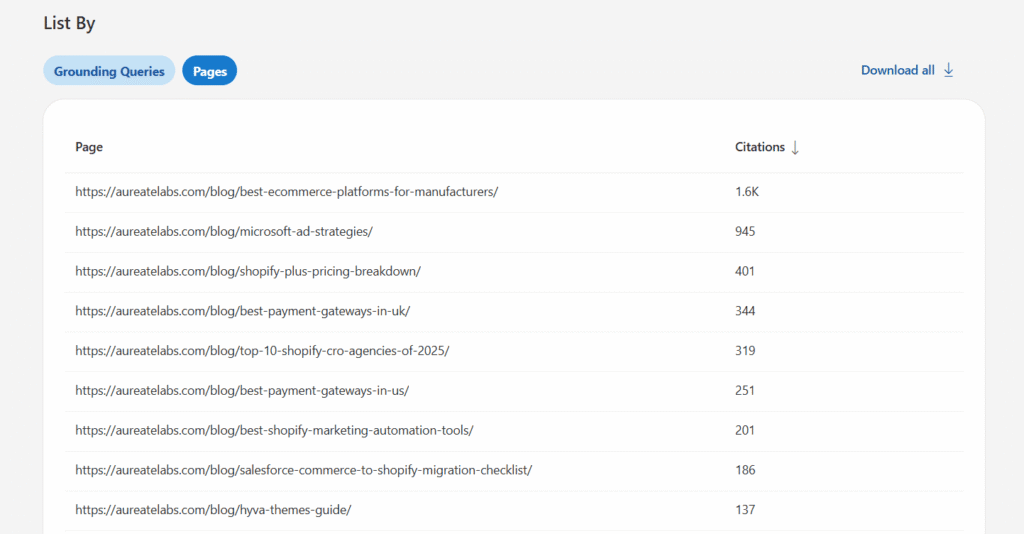
When a page is indexed but never appears in this data, that is worth paying attention to. Either the page structure is making it hard for AI to extract useful content from it, or more authoritative sources are covering the same topic and getting the citation instead.
5. Visibility Trends Over Time
The trend view lays out your citation activity across the full 90-day window. Steady upward movement is the goal. Sudden drops tend to point to something specific: a content update that changed what the AI can work with, a technical issue disrupting crawling, or a competitor that recently strengthened their coverage on a topic you were previously owning.
Seasonal patterns are real here, too, especially for topics tied to purchase cycles or predictable industry events.
This is where the AI Performance dashboard earns its place in long-term strategy work rather than just serving as a one-time audit.
How Accurate Is the Bing AI Performance Report?
Accuracy matters here. Whether you are sharing this data with a client, a manager, or building your own strategy around it, you need to know what the numbers actually reflect and where they fall short.
To Microsoft’s credit, they are upfront about the tool’s constraints. Grounding queries are sampled, not exhaustive. The AI Performance report aggregates data across supported AI surfaces, which means there is no way to separate Copilot activity from Bing AI-generated summaries in the numbers you see.
What the data measures is citation frequency, nothing more. It does not tell you about ranking or prominence within a response. Factor in a typical 2 to 3 day reporting lag, and keep in mind that since this is a public preview, the methodology behind it can still shift.
The data shown represents real citation events. But you are looking at a filtered, aggregated view of those events, not a complete audit trail of every time your content was used.
Most AI Content Use Happens Without Visible Credit
There is a meaningful difference between an AI tool using your content and an AI system crediting your content. The former is grounding. The latter is visible attribution. Most people underestimate just how wide that gap is in practice.
The bulk of grounding events produce no visible citation at all. Your content informed the response, your structure and the content owner’s preferences expressed through expertise helped shape what the user received, but your brand name never appeared anywhere. The AI Performance in Bing Webmaster data does capture citation events, but even those represent a fraction of how often your content is actually doing work inside AI-generated responses.
None of that is necessarily a bad outcome. Grounding authority still matters. When your content consistently influences what AI systems say, that shapes brand perception and answer quality even when you are not getting named. The key is understanding what you are and are not measuring when you look at this dashboard.
Limitations and Gaps of Bing Search Performance Tool
Before acting on this data, it is worth being clear about what the tool leaves out:
- A citation tells you your brand appeared in a response. It does not tell you whether that response sent a single visitor to your site. Traffic data simply is not part of this picture.
- There is also no way to gauge where you landed within a response. Whether you were the lead source or a brief mention tucked near the end, the Bing search performance tool treats both the same. Citation prominence is not something it tracks.
- The grounding queries in your dashboard are the AI’s internal retrieval phrases, not verbatim searches from real users. They are useful for content direction, but do not mistake them for actual search behavior.
- Your view is limited to your own site’s data. Who else is being cited alongside you for the same topics in your niche? That competitive picture is completely absent here.
- And the tool does not cross platform lines. Your performance in ChatGPT, Perplexity, or Gemini is outside its scope entirely.
The Short: you know a citation occurred, but the tool will not tell you which response it appeared in, how prominently your content featured, or what effect it had on anyone reading it.
Cross-Referencing for Validation
Because these gaps are real, this data works best when paired with other sources. Check your server logs to confirm actual AI crawler visits from Bingbot and GPTBot, which gives you a ground-level view of what is actually being crawled.
Manual spot checks are worth building into your routine as well. Take your highest-volume grounding queries and run them directly in Copilot to see whether you appear and in what capacity. For visibility beyond Microsoft’s ecosystem, tools like Track My Visibility can layer in cross-platform citation context that the Bing search performance data cannot provide on its own.
The right way to treat this tool’s output: directional guidance, not a definitive measure of your AI search presence.
How to Access and Set Up Bing AI Performance
Getting started does not take long. You just need a verified site in Bing Webmaster Tools, which is completely free and available to any public website.
One thing to keep in mind if you are managing multiple subdomains or regional versions, like a .com and a .uk, each property needs its own separate verification.
Also, if the dashboard appears blank right after you verify, that is completely normal. It typically takes 48 to 72 hours before the data starts coming through.
Step 1: Verify Your Site
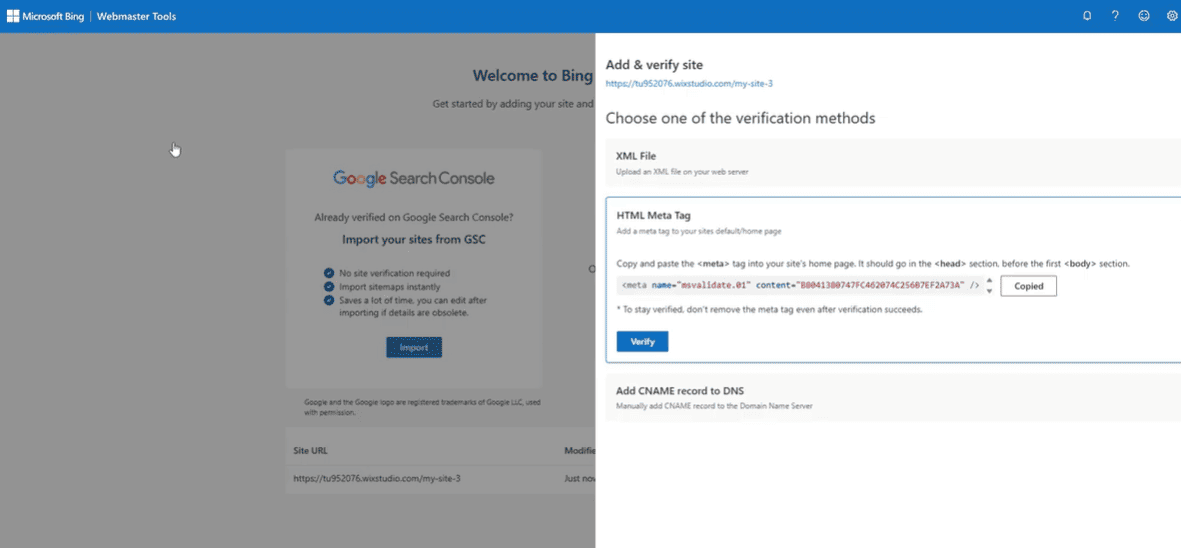
Verification gives you three paths: upload an XML file, place a meta tag on your site, or add a DNS record. All three options work, but for larger sites, DNS is generally the most stable choice. Meta tags tend to get accidentally removed during site updates or deployments, which means repeating the verification process from scratch.
Even if the bulk of your traffic comes from Google, taking five minutes to verify is still worth it. It gives you a proper AI performance baseline to work from, and it also tells Microsoft’s index that your site is being actively maintained.
Step 2: Navigate to the Dashboard
Visit bing.com/webmasters, select the relevant property, and locate AI Performance in the left-hand navigation menu. If you recently completed verification, allow a day or two before expecting anything to populate. An empty dashboard at the start is not a sign that something went wrong. It is just the standard delay before citation data begins to appear.
Step 3: Select Date Range and Export
Bing Webmaster Tools gives you a 90-day rolling window to analyze. The visual charts are good for picking up on broad patterns at a glance, but for any meaningful analysis, the CSV export is where you will want to spend your time. It breaks out citation counts alongside grounding queries, which are the specific phrases AI systems use when retrieving your content to construct a response.
For keeping things consistent week to week, a brief weekly check is enough to catch anything unusual early. A monthly sit-down with the data gives you a better view of whether the AI Performance dashboard is pointing to anything that needs attention in your broader content strategy.
A couple of practical notes before you begin: verified site ownership in Bing Webmaster Tools is required, and any public website is eligible. If AI crawlers are currently blocked through your robots.txt, the tool will have nothing to report, so no data will show up. Sites with multiple subdomains or regional versions each need to go through the verification process independently.
And if your dashboard is empty right after setup, just wait it out. The standard delay after verification is 48 to 72 hours before data starts appearing.
Interpreting Your Microsoft Bing AI Performance Data
This dashboard acts as a GPS for your content’s influence. It will not show you foot traffic just yet, but it does show which maps the AI is actively using to point people in a direction.
Establishing Your Baseline
Sparse numbers in the beginning are not something to stress over. Think of the first 30 days as a calibration period, not a performance review. A local business seeing fewer citations than a major national publication is completely expected. Your site’s size, topic niche, and where you currently stand in bing search engine ranking all factor into what a reasonable baseline looks like for your specific situation.
High-Performing vs. Underperforming Patterns
As you go through your weekly trends, these are the signals worth paying attention to:
- Green Flags: Citation volume trending upward over time, with multiple pages getting picked up rather than the same one repeatedly. When your grounding queries reflect your actual business topics and user intent, that alignment is a good sign the content is doing its job.
- Yellow Flags: Three or four consecutive weeks of declining citations without an obvious trigger, or citation activity concentrating heavily around a single page. Either pattern suggests your content coverage needs to be wider.
- Red Flags: Your highest-quality pages sitting at zero citations, or a sharp drop across the board with no clear explanation. Head straight to your robots.txt. There is a reasonable chance AI crawlers are being blocked somewhere without you knowing it.
Content Type Performance
Long-form guides and best-of compilations hold up consistently. FAQ pages and help center content carry strong citation potential but rarely get the structural attention needed to realize it. Product pages are unpredictable and largely depend on the depth of information they actually provide.
Thin programmatic pages with templated content rarely generate meaningful citation activity. Case studies and original research are a different story. When the data behind them is credible and the page is cleanly structured, they tend to earn citations reliably.
Understanding Your Grounding Query Data
Pull your grounding queries, sort by volume, and start with the branded versus non-branded breakdown before anything else.
What you want is a solid mix of both. If 70% of your citation activity is coming from non-branded, topic-driven queries, your authority signals are working. If your citations are clustering around broad informational searches when your actual goal is to appear for specific product comparisons or buying-stage content, that tells you exactly where a content gap exists.
Let that data guide where you build out your how-to and comparison content next.
How to Optimize Your Content for Higher Bing Copilot Citations
AI has moved well past simply reading your pages. It is now mining them for facts it can use in responses. Getting cited means rethinking your content’s job: the goal is no longer just to rank, it is to be extracted. If you want a deeper look at how to optimize content for AI answers, the principles apply across all AI platforms, not just Bing Copilot.
1. Content Structure That Gets Cited
Every heading should set up a question, and the paragraph beneath it should answer that question immediately. One idea per paragraph, fully developed before you move to the next. Build out FAQ sections and mark them up with schema. Your introduction needs to identify your topic or entity in the first sentence, not buried after a few lines of context-setting.
Content that is easy to extract consistently shows up more in AI Performance in Bing Webmaster data. Clear headings and tight structure are no longer just good writing habits. They are now a visibility strategy.
2. Writing for AI Extraction
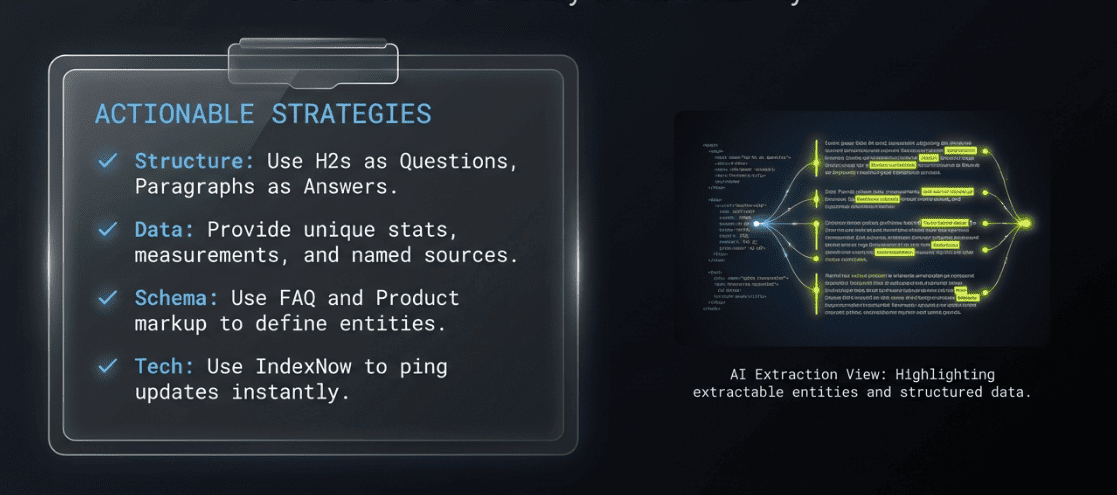
Ground your claims in specific data points, precise measurements, and named sources. Bring in expert quotes and link directly to the studies behind your assertions. Phrase key takeaways as clean, self-contained statements that could stand on their own if pulled out of context. Stick with consistent terminology across the page rather than varying your word choices for style.
Make IndexNow part of your workflow. Pinging Bing the moment you update a page is the most reliable way to keep Copilot from referencing your outdated 2024 stats in its AI generated answers.
3. Technical Optimization
Schema markup has become table stakes. Product, Review, FAQ, HowTo, and Local Business schemas all help supported AI surfaces interpret your content accurately. Server-side rendering gives AI crawlers a cleaner signal than client-side JavaScript. And before anything else, check that your robots.txt is not quietly blocking AI crawlers from reaching your pages.
One thing that trips a lot of people up: GPTBot and Bingbot are entirely separate directives. Disabling one does not affect the other. On the internal linking side, building topical authority clusters across your site improves both your Bing search engine ranking and the rate at which AI systems pull from your content.
4. Topical Authority
AI systems are selective about their sources. Citations go to sites that have earned authority on a specific topic, and that authority is established through genuine depth of coverage, quality backlinks, visible expert authorship signals, and a track record of accurate content published consistently over time.
There is no faster route. Bing search performance in AI citations draws on the same trust signals that traditional ranking has always depended on. If the fundamentals are solid, they carry over.
Analyzing Page-Level Citation Performance
Page-level citation activity is where the guesswork ends. Instead of assuming which pages are doing the heavy lifting for your AI visibility, you can see exactly which URLs the AI is referencing and how often.
1. High Grounding, Low Visible Citation
Your content can drive an AI-generated answer without your brand appearing anywhere in the response. This occurs when the AI leans on your page for contextual grounding rather than lifting a specific claim or data point. Your page shaped the output. The user just never knew it.
When this pattern shows up in your page-level citation activity, the root cause is usually the same: the content is too generic. AI systems can absorb broad, general information without needing to attribute it to anyone.
The kind of content that earns visible attribution is content the AI cannot quietly paraphrase away. Original research, proprietary data, firsthand expert perspective. When your insight is genuinely hard to replicate elsewhere, the AI has a reason to name you as the source rather than fold your contribution into an uncredited response.
2. Indexed But Never Cited
There is a particular frustration in having pages sitting in Bing’s index that never show up in citation activity at all. This is more common than most site owners realize, and it almost always points to one of two underlying issues: the page structure makes it difficult for AI to extract useful content from, or the page is competing against more authoritative sources on the same topic and consistently losing that competition.
Three practical directions to consider:
- First, rework the page structure so it is easier for AI to extract clear, citable content from
- Second, consolidate the page into an existing piece that already carries topical authority
- Third, accept that not every indexed page is worth rescuing and redirect that investment somewhere it will actually move the needle. Not everything on your site deserves a second chance.
3. Declining Citation Trends
When visibility trends start moving downward, content freshness is the first variable to examine. AI systems are built to favor information that is current and accurate. And a guide that was thorough in early 2025 can get quietly displaced by something published more recently, even if the newer piece is not dramatically better. A competitor may have simply updated their version before you updated yours.
Do not treat these drops as failures. They are useful signals that tell you exactly where a targeted freshness update or a focused content expansion would actually shift citation patterns. The AI Performance in Bing Webmaster data is doing the diagnostic work for you here.
What Grounding Queries Reveal About AI’s Understanding
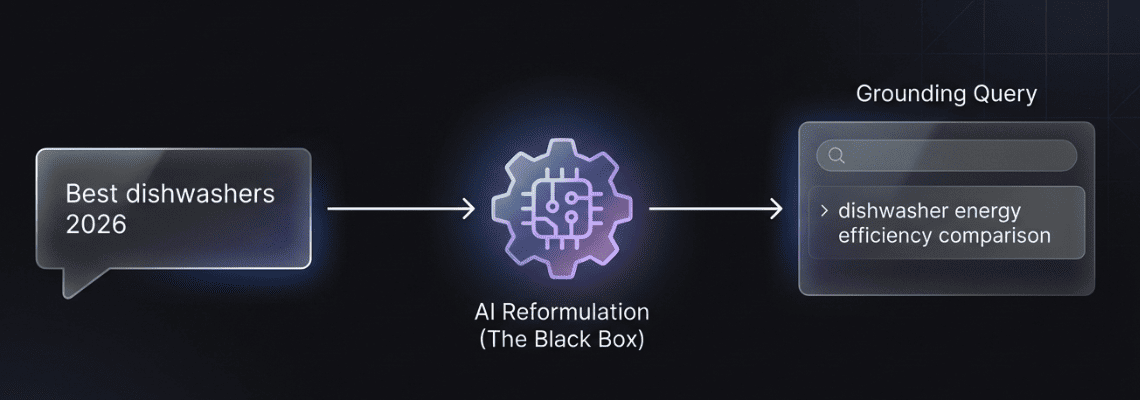
Grounding queries give you a window into how AI interprets the intent behind your pages. If a product page consistently appears for informational queries instead of commercial ones, the issue is not keywords. The problem lies in the content architecture. The page does not clearly signal buying intent to the AI, and changing a few terms will not solve it.
Coverage gaps become visible here too. When you are generating citations within a broader topic cluster but specific subtopics never appear in your grounding queries, you are either missing that content entirely or it exists in a form the AI cannot cleanly extract from. Both are fixable, but you need the data to know which problem you are actually dealing with.
Building a Prompt Research Strategy
Make exporting your grounding queries a regular habit and organize them by funnel stage and topic cluster each time. Over time, you build a working prompt research library that reflects how AI systems actually retrieve and surface content, not just how users phrase search queries.
Stack that against what you are observing from other AI tools and platforms, identify the themes drawing the highest citation volume, and build content that addresses them directly. That is generative engine optimization applied in a way that is grounded in real data rather than assumptions.
Troubleshooting Common AI Performance Issues
When your AI Performance dashboard comes back with little or no data, resist the urge to assume something is broken. The absence of data is itself a signal. Work through these three scenarios before drawing any conclusions.
1. Zero Citations Despite Quality Content
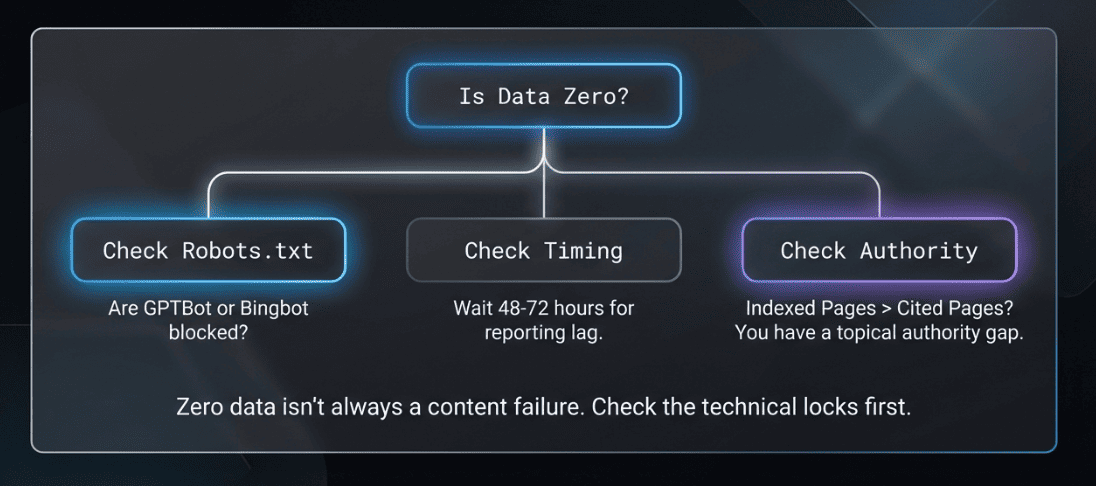
Check robots.txt before anything else. GPTBot and Bingbot need access to your pages for citation activity to register in the AI Performance report. If either is blocked, the AI has no way to reach your content and the report stays empty. One thing site owners miss: these are two independent directives. Restricting one does nothing to the other.
Timing is the next variable to rule out. The AI Performance report processes information with a built-in 48 to 72 hour data lag. Content that was recently published or updated may still be working through the queue. Hold off on any conclusions for a few days before deciding something is actually wrong.
After that, verify that Bing has indexed your pages. AI Performance in Bing Webmaster can only report on content that Bing has crawled and indexed. Patchy indexing produces patchy citation activity, so if your index coverage has gaps, that is where to look next.
2. Low Citations Relative to Indexed Pages
A pattern where a small number of indexed pages account for nearly all your citation activity usually signals a topical authority gap. The AI trusts your site in two or three areas, but has not yet extended that confidence to the rest of your content.
Internal linking is one of the more reliable fixes here. Connecting related pages gives the AI a clearer map of how your content is organized and what topics belong together. Schema markup on underperforming pages adds another layer of clarity, giving the AI more direct signals about what those pages actually cover.
Neither adjustment is a quick win, but both tend to show up as gradual improvement in overall citation patterns over time.
3. Declining Performance Over Time
A dip in Bing search performance does not automatically mean something went wrong on your end. Before you start making changes, check whether the timing matches a seasonal pattern. Tax-related content typically sees lower activity in summer. Gift guide traffic spikes in November. If the drop lines up with a predictable calendar cycle, that context matters before you do anything else.
When seasonality is not the explanation, two areas deserve attention. First, whether any technical changes went live on the site around the same time the decline started. Second, whether a competitor has put out fresher or better-structured content on the same topics you cover.
A Bing search performance drop that tracks closely with a site update almost always traces back to a technical cause. A slow decline with no obvious trigger, on the other hand, tends to be competitive displacement, and the fix there is content, not configuration.
Track My Visibility: Best Addition to Bing’s AI Performance
Bing Webmaster Tools is a Microsoft-only window. What happens inside ChatGPT, Perplexity, Google AI Overviews, or Gemini stays completely out of view. For most sites, that gap represents 80 to 90% of total AI search activity.
Track My Visibility is a brand AI search visibility tool designed to monitor AI visibility across multiple AI search platforms at once. It expands on Bing’s existing data by tracking citations across platforms, revealing which competitors get cited for your target topics, providing prominence indicators, and showing how users phrase questions to AI systems through prompt-level data.
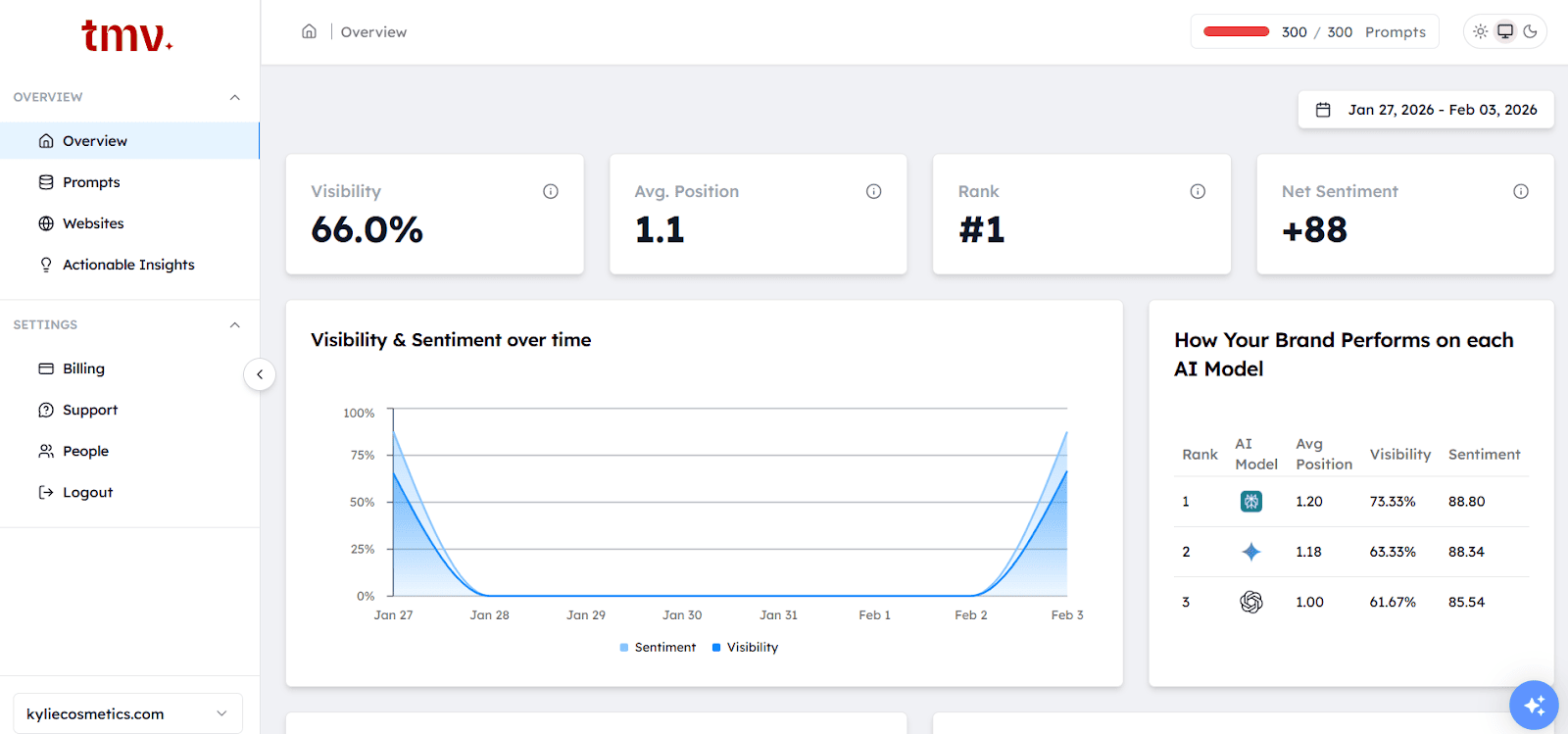
Here is what Track My Visibility actually measures and what each metric is telling you.
- Prompt-based AI Visibility Check: You select the questions, whether that is prompts you write yourself or query sets modeled around real customer personas. The AI visibility tool then runs those prompts and returns data on whether AI models are sending people to your brand or redirecting that visibility to a competitor. It is a practical, early step for any site owner trying to understand where they actually stand in AI search.
- Run Across AI Models: Those prompts get tested against ChatGPT, Google AI Overviews, Perplexity, and Gemini simultaneously. Rather than manually checking each AI search platform one by one, you get a side-by-side comparison showing where your brand is appearing and where a competitor has taken your spot.
- Competitor AI Visibility: You get visibility into which competitor pages are being cited for the same topics you care about, and where they are appearing in AI-generated answers instead of you. That information makes it considerably easier to build a plan and close those gaps.
- Brand Mentions Dashboard: Your citations, mentions, visibility by AI model, and competitor comparisons all sit inside one dashboard. The platform clearly lays out how content appears across platforms, so you do not need to switch between tools or manually combine data to see the full picture.
- AI Readiness Score: Each page receives a score based on how likely AI search engines are to cite it. Factors like clear headings, well-organized key information, and overall content structure directly influence that score, indicating placement potential within AI-generated responses. It is a quick way to see which pages AI already trusts and which ones still need work.
- AI-ready Recommendations: Instead of leaving you to diagnose problems on your own, the brand visibility tool gives you a prioritized, specific action list. Add this context, restructure this section, strengthen this signal. The focus is on improving clarity and structure so your team always knows exactly what to address next.
If generative engine optimization is part of your strategy, a single platform’s data will leave you with a partial view. Bing Webmaster Tools gives you the Microsoft slice. Track My Visibility covers the rest.
How to Use Both AI Visibility Tools Together
- Before layering in any additional data, use Bing Webmaster Tools to nail down your citation baseline. Get a clear read on which pages and content types are gaining traction inside Microsoft’s ecosystem first.
- From there, export your grounding queries and organize them by funnel stage. These phrases are not just data points; they form the backbone of your prompt research and reveal which topic clusters your site already owns.
- Layer in Track My Visibility to see how those same pages and topics perform on ChatGPT, Perplexity, and Google AI Overviews. From there, you can measure your visibility in AI content and build a clearer picture of where your brand stands. You can also cross-reference to find platform-specific gaps.
- On a monthly basis, pull your server logs and scan for AI crawler activity. GPTBot, PerplexityBot, and ClaudeBot visits are your ground truth. They confirm that citation activity is converting into actual crawls, not just inflating a dashboard number.
- Do not skip the manual verification step either. Take your highest-volume grounding queries from Bing and run them directly in each AI platform. Pay attention to whether you appear, where in the response you land, and which other sources are showing up alongside you.
- Bring it all together in one unified reporting view: Bing citation trends, Track My Visibility cross-platform data, and server log signals sitting side by side. Use weekly check-ins to catch sudden movement and monthly reviews to drive bigger content decisions.
- One diagnostic pattern is worth keeping on your radar: when Bing search performance data dips but Track My Visibility numbers hold steady, that is typically a Bing-specific technical problem. When both drop at the same time, the issue usually lives in your content quality or overall authority.
Key Takeaways and Action Plan
AI Performance in Bing Webmaster gives you the first real look at AI visibility data, but think of it as one lens in a much wider set.
Before you share these numbers with anyone, get the accuracy limitations straight. Citation counts tell you how frequently your content appeared, not how prominently it featured, not whether it drove clicks, and definitely not whether it moved revenue. Content structure and topical authority are the levers you have direct control over. GEO is built on top of SEO fundamentals, not a replacement for them.
The only way to get close to a complete picture of your AI visibility across search engines is to run Bing Webmaster Tools alongside Track My Visibility and your server logs. No single source covers it all.
Build from there.
FAQs
How do I optimize for Bing search?
The foundation is the same as it has always been: clean crawlability, schema markup, and quality backlinks. Bing search engine ranking responds to many of the same signals as Google, but puts more weight on exact-match relevance and overall site authority. Comprehensive topical coverage matters here too. The more depth you have on a subject, the more relevant information you are feeding both the search engine and its AI surfaces.
What percent of searches are done on Bing?
According to Statcounter, Bing’s global search market share sits at around 4.4%, but that number alone does not tell the full story. On desktops and in corporate environments, that figure moves up to somewhere between 10 and 15%. If your target audience skews B2B, Bing’s actual footprint is probably bigger than you are giving it credit for.
Does Bing have AI results?
Yes. Copilot runs directly within Bing’s search results alongside the traditional blue links. Bing search performance now measures both sides: where your pages rank and how often AI-generated answers use your content. These AI-driven experiences are taking up more real estate on the results page, so watching both signals is worth your time.
Is Bing Webmaster Tools free?
Completely free. There is no paid plan, no premium tier, and no upgrade required. Every core feature, including AI Performance in Bing Webmaster, is available to any verified site owner at zero cost.
Is Bing Webmaster Tools legit?
Yes. It is Microsoft’s own platform for website owners to monitor and manage their Bing presence. The data comes from real citation events, though it carries the sampling and aggregation caveats discussed earlier in this guide.
Bing respects publisher content and content owner preferences. The platform honors supported control mechanisms such as robots.txt directives and reflects those settings in its reports.
What is Bing Webmaster used for?
It handles crawl health, search performance, and index status, and now adds AI citation tracking through the AI Performance dashboard. The AI Performance section shows how your content feeds into supported AI experiences across Microsoft’s ecosystem. It highlights the unique pages the AI cites, shows how citation patterns change over time, and identifies the topics the AI associates with your site.
How much does Bing Webmaster Tools cost?
Nothing. It is free for any verified site owner, no conditions attached.